16/06/2010

Mick Wills - Fern Hill (1988)

«Guitarist and songwriter Mick Wills is a close pal of Bevis Frond frontman Nick Saloman. Wills and Saloman played and recorded together in a band called the Parthenogenetick Brotherhood of Woronzow. Woronzow is a pet label project of Saloman’s, hence this record’s issue in 1988, and its eventual very limited CD release on Acme in 1995. Much of the disc falls into the trad folk and blues category with one or two notable exceptions. The title track is a six-string workout that is almost reel, in feel and structure; it departs in the turnaround that is more Anglo than Celtic in style. On "The Storm," one is reminded of Michael Chapman’s tune "The Rainmaker," where the English Channel provides accompaniment in the form of waves and swells as Wills moves into the folk-blues, bending and pulling the hell out of his strings, varying tempos, and allowing the waves to provide a kind of percussive atmosphere. One listen and it’s obvious: the guy’s a monster guitar picker. One of the previously mentioned exceptions is "Jam #3-Extracted Decebelia," which features Wills burning up a blues jam on an electric guitar, Cyke Bancroft on alto saxophone, and Graham Cummings on organ. Saloman participates as a duet partner on the gorgeous tunes "Saxifrage" and "Waltz." The guitar interplay is as telepathic as Ronnie Woods and Keith Richards, but tougher, more fluid, and certainly not as burnt out sluggish as all that. The finest track on the disc is its closer, "She Looked Down," with vocals by Jenny Brown. It’s a lengthy tune, with Saloman playing lead electric guitar, bass, and drums. However, it’s Wills and Brown who shine here. Wills’ folk styles are so fluid, so silvery and knotty he’s like Richard Thompson or Martin Carthy with his traditional material, but so much faster and so much darker, using diatonic fourth and eights to punch up the standard minor key lines of his melody. Brown doesn’t enter the tune until almost three minutes in, after some lengthy interplay by Saloman and Wills. The lyrics are simply adapted from old world folk songs, like something out of Steeleye Span or Fairport in their true neo-traditionalist period. But half way through the track’s nine minutes, there is a break with tradition. Although the melody remains throughout, the song drifts, hither and yon, transforming itself into a psychedelic folk/acid jam, ending up in some other place and time, far from the territory it began in. It’s too bad this set isn’t readily available, as fans of Bevis Frond would get a kick out of it, and Wills varies it so much there is something for almost everyone here.» (Thom Jurek, All Music Guide)

Link in comments

14/06/2010

Ismael Ledesma - Music Around the World: Paraguay (1998)

«Ismael Ledesma was born in the town of Lambarré ( Paraguay) en 1962. He played his first notes on the harp with his father when aged five years old. His career as a musician started in his mother’s group, Los Madrigales, which appeared in different evening concerts in the town of Asunción, in various private and social events. At the end of his secondary school studies Ismael was invited to France by his uncle Kike Lucena who had lived in Paris since the 70’s. In 1982 he travelled to Paris in order to join the circle of Latin American musicians in the capital. There he joined some of the diverse groups of those times. In 1985 he decided to pursue a solo career. In parallel to his artistic activities Ismael perfected his French, enrolling at the University of Sorbonne in Language and French Civilisation. He also became a student at the International Music Conservatoire of Paris, Alfred de Vigny.

His first concert as a pure soloist took place in Paris at the Theatre du Marais. It was at this time that Ismael decided to bring his own compositions to the scene. This was a risky decision as Latin music is often considered as “exotic” in Europe and is presented purely as folk-lore music. Ismael looked at breaking this stereotype and to creating a new platform for Latin American music by openly showing his own new musical ideas and by singly interpreting his own compositions. Ismael has made 13 CDs with different producers: French, German, Swiss and Paraguayan. Ismael Ledesma is thought of not so much as a world-harpist, as a Universal Harpist!» (ismaelledesma.com)

Biography also available in Spanish, French and Guarani.

Link in comments

12/06/2010

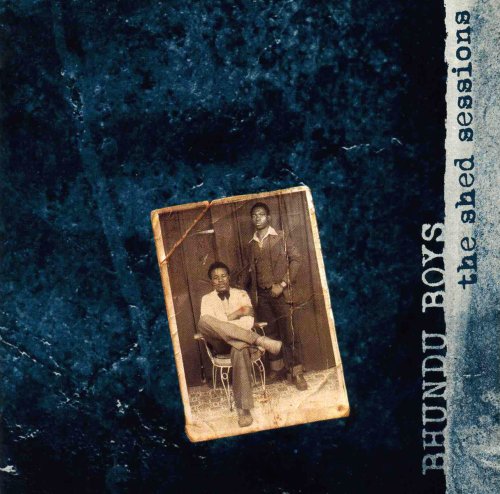
Bhundu Boys - The Shed Sessions 1982-1986 (2001)

«The most commercially and creatively successful act ever to emerge from Zimbabwe, the Bhundu Boys embodied the world music zeitgeist of the mid-'80s. Creators of a frenetic, guitar-dominated style they dubbed "jit," they fused airy melodies, shimmering harmonies, and pulsating rhythms drawn from across the African continent to make music that was both alien and accessible. Taking their name from the guerrillas who backed Robert Mugabe in his successful war to win Zimbabwe's independence from Britain, the Bhundu Boys formed in April 1980 in the city of Harare, which translates literally (and, sadly, prophetically) as "death everywhere." Lead guitarist Rise Kagona assembled the original lineup, which also included singer/guitarist Biggie Tembo, bassist David Mankaba, keyboardist Shakie Kangwena, and drummer Kenny Chitsvatsva. Making do with homemade instruments, the Bhundu Boys cut their teeth playing Western pop covers in township beer halls, and were a local phenomenon by the time they were discovered by erstwhile property developer Steve Roskilly, who cut their earliest sessions in his home studio, Shed. Their 1981 debut single, "Hatisitose," topped the Zimbabwean charts for three months straight, and in the years to follow the band scored three more national number ones with "Baba Munini Francis," "Wenhamo Haaneti," and "Ndimboze."

The Bhundu Boys' ascent to international fame began when Owen Elias and Doug Veitch, owners of the fledgling Discafrique label, traveled from London to Harare in search of artists to sign. There they befriended Roskilly, and on his encouragement cut a deal to reissue the band's records in the U.K. Elias and Veitch also plotted to bring the Bhundu Boys to Britain to tour, but when funding dried up Discafrique turned to Scottish promoter Gordon Muir, who in time took over the band's management. Most critical to the Bhundu Boys' growing momentum was the endorsement of BBC Radio One DJs John Peel and Andy Kershaw, both of whom played their Discafrique LPs Shabini and Tsvimbodzemoto incessantly – a few years later, Kershaw even served as best man at Tembo's wedding. In 1987 Muir brokered a landmark deal with WEA, reportedly the most lucrative ever signed by a world music act, and while at work on their major-label debut, the Bhundu Boys opened three nights for Madonna at Wembley Stadium, playing to a crowd of 240,000 at the personal request of the Material Girl herself. But their 1988 WEA debut, True Jit, was a disaster, sacrificing the elegant simplicity of their earlier work for an over-produced, Westernized sound that alienated their core fan base. The 1989 follow-up, Pamberi, was no better, and WEA terminated their contract soon after.

The Shed Sessions: 1982-1986 comprise the two albums that Zimbabwe's Bhundu Boys recorded at Harare's Shed Studios between 1982 and 1986. It's where Biggie Tembo and the rest of the band developed their jit-jive style and created a classic sound with intricately interlocking guitar parts. Comprised of two LPs, Shabini and Tsvimbodzemoto, this is really the legendary sound of the band, spawning four number one singles at home and establishing their reputation overseas. This CD not only collects the songs from those albums, but adds more, for a total of 28 cuts, all powered by some storming guitar work. But while they show their fire on tracks like "Pachedu," they also take on the feel of more traditional mbira music on the moody "Manhenga."

It's ironic that they should hit their creative high point so early in their career, never recapturing the spirit that made this music so remarkable and glittering. From here they'd move to England, but in the '90s everything would fall apart, as members died of AIDS and Biggie Tembo hanged himself after being asked to leave the band. A tragic end that wasn't foreseen in some of the best guitar music to emerge from Africa.» (AMG, click here for the full bio)

Links in comments

07/06/2010

Le World... Cuba: Los Exitos de los Años "50"

Benny Moré, Rolando La ‘Serie and Tony Camargos have had considerable success in Cuba and the world over in the 50s. Omly Benny Moré is still famous today and considered a Cuban music god. The three musicians were regrouped in this compilation for their highly similar voices and repertoires.

Maximilian Bartolomeo Moré (1919-1963), “el barbaro del ritmo”, was born to a modest African family settled in Santa Isabel de Lajas. He was very young when he started learning music with his brothers. One of his uncles from Congo taught him how to play the guitar and the congas. […] In 1940 he set off to Havana. There he won several singing competitions and […] was noticed by the already famous Conjunto Matamoros. He played in one of their records and in 1945 he took part to a tour in Mexico with them. He obtained a visa that allowed him to go to Mexico as often as he wished to. His recitals at Mexico Citu’s prestigious Rio Rosa cabaret were steps towards fame throughout Latin America. He met Lalo Montané with whom he founded the Fantasma Duet. In 1948, as mambo appeared in Mexico, Benny Moré was immediately seduced by this new rhythm and enriched his Afro-Cuban genre with it.

When he came back to Cuba in 1950, Benny Moré had become a star throughout Latin America and was given a triumphant welcome. […] He later joined the famous Bebo Valdés’ orchestra as well as Ernesto Duarte’s. Then he joined forces with trumpet player Armentero Chocolate to found his own line-up. From 1953 to 1963, the Banda Gigante became increasingly successful and helped Benny Moré rank among the greatest artists.

Rolando La ‘Serie was among the singers of the Cuban popular genre. Born in Las Villas in central Cuba, he made his first steps to music playing the kettledrums in Santa Clara’s local band. […] In 1945, he had become quite famous in Havana. […] He liked and was extremely gifted for imitating great singers.

In 1952, Benny Moré appointed him as his orchestra’s drummer. He was then noticed by the record company gema with which he recorded his successes. Gema had the great idea to have pianist Bebo Valdés’ Orchestra accompany him. Following this, Rolando La ‘serie became a star. […] He released over 30 records and won a Gold Disc in 1959.

Tony Camargo was renowned in the 1950’s big Cuban perios as one of the most gifted Mexican singers in the Cuban genre. He was lucky enough to play with the time’s best orchestras and had the privilege of singing in duet with Benny Moré. In the rare as well as precious songs featured in this compilation, Tony Camargo is accompanied by two of the Jazz Band genre’s “big shots”, chucho Rodriguez and Luis Gonzalez. (From the liner notes).

Link in comments

03/06/2010

Freshlyground - Nomvula (2004)

«Freshlyground is a South African Afro-fusion band that was formed in Cape Town in 2002. The band members are from South Africa, Mozambique and Zimbabwe. Stylistically, Freshlyground incorporates elements of traditional South African music (such as kwela and African folk), blues and jazz, as well as features of indie rock. The lead singer is Zolani Mahola whose distinctive voice contributes much to the band's unique sound.

Freshlyground launched their debut album, Jika Jika, in early 2003. The great success of this album ultimately kick-started their career and re-affirmed their reputation as a fresh and vibrant young face in South African music. The much-needed exposure from the album resulted in an invitation for the band to perform at both the Harare International Festival of the Arts and the Robben Island African Festival. At the Harare International Festival of the Arts (HIFA), Freshlyground performed with Zimbabwean musician Oliver Mtukudzi, who is also renowned for his diverse blending of different African music genres.

The band went on to perform alongside local legends Miriam Makeba, Stanley Clarke and Femi Kuti at the North Sea Jazz Festival, held during April in Cape Town. July also marked a break from the recording studio for the band, who had been working hard on their then unreleased album Nomvula. The band took this time to perform at the Villa Celimontana Festival in Rome, Italy.[…]

Finally, in late 2004, Freshlyground released their very successful album, Nomvula. Although the uptake of the album was initially slow, it eventually went on to achieve double platinum status locally. Initial success was largely due to the catchy, feel-good, lyrics of Doo Be Doo, which enjoyed significant play on local radio, it also covered in Indonesian by singer Gita Gutawa.

Freshlyground's latest album Ma' Cheri was released on September 3, 2007. […]

A song by Colombian pop star Shakira and Freshlyground has been chosen as the official anthem of this summer's World Cup. The song, "Waka Waka (Time for Africa)", […] is based upon a traditional African soldiers' song named "Zangalewa". Shakira and Freshlyground will perform the song at the pre-tournament Kick-Off concert in Soweto on 10 June. It will also be sung at the opening ceremony and at the final on 11 July.» (Wikipedia)

Link in comments

27/05/2010

Saddar Bazaar - The Conference of the Birds (1995)

«Bristol based and formed in 1990 by Shaun Hyder (Sitar etc.) and Rehan Matthew Hyder (Slide Guitar), Saddar Bazaar (Central Market) were soon joined by John Sage on Drums and supported various bands in the local area such as The Seers, Praise Space Electric and the Bevis Frond. They also played at the well known Ashton Court Community Festival in Bristol. By 1992 John had left the band and had been replaced by David Spencer, whilst Tainenska Royal came in on flute and keyboards. It was this line-up that recorded “Night Descent” for the indie charting Fun With Mushrooms album on Delerium. The bands appearance on this album resulted in a pile of mail from punters, at Delerium HQ, requesting a whole album of material by the band. It also resulted in a session for American doom metal band Solitude Aeturnus! (Saddar Bazaar play on the track “The 9th Day” on the band’s 1994 album Through the Darkest Hour on Music For Nations). Delerium decided to fund an album and the finished article featured new keyboard player Terry Banx and was produced by Bob Pierce (an ex-member of 60s UK psych band The Mirror). The Conference of The Birds is one of Delerium’s strangest releases to date. A perfect acoustic Eastern chill-out experience that harkens back to groups such as The Third Ear Band and The Ceyleib People, with its atonal, psychedelic simplicity, whilst appealing to the ambient trance textures of todays head music scene…» (Last.fm)

Link in comments

26/05/2010

Erkin Koray - Benden Sana (1982)

«Erkin Koray (born June 24, 1941, in Beykoz, Istanbul) has been in the Turkish rock music scene since the late 1950s or early 1960s. He is widely acclaimed as being the first person to ever play rock and roll in Turkey; in 1957, he and his band gained fame by playing covers of Elvis Presley and Fats Domino. He was also one of the first Turkish musicians to embrace the electric guitar and modern amplification.

By the late 1960s, he was already a major figure in Turkish psychedelic music and Anatolian Rock, beginning with his first psychedelic single Anma Arkadaş in 1967. Koray followed this with a number of singles, both by himself and in collaboration with others, that established him as a force to be reckoned with on the Turkish rock scene. Koray became a controversial figure in Turkey during the 1960s and 1970s; he was actually assaulted in Istanbul, and on one occasion stabbed, for having long hair.

In the early 1970s, he formed the group Ter with the former members of Grup Bunalim, a power trio styled group. […] The music of Ter was influenced by glam rock and psychedelia, and featured extended guitar solos and progressive arrangements – something that his record company, Istanbul Records, was not prepared to accept.

The Turkish public remained interested in Koray's solo work nonetheless, and in 1973 his first album, Erkin Koray, was released. […] The album consists of a collection of singles from 1967 to 1973. Koray left Istanbul Records after its release, signing to Doglan Records. […] 1974 saw the release of his groundbreaking album, Elektronik Türküler (“Electronic Ballads”). Finally given the freedom to record an album instead of being limited to 45 rpm singles, Koray and his band created an album that reflected both his Turkish roots and his love of psychedelic and progressive rock. The album's popularity continues to the present day, with several legitimate and non-legitimate releases on both album and CD. Elektronik Türküler is widely considered to be Koray's masterpiece by many critics, and many of his subsequent releases followed in this vein, with progressive and psychedelic influences balanced by Turkish folk forms. […]

Benden Sana (From Me to You), released in 1982, saw Erkin Koray experimenting with Indian music. It was recorded in Germany and Istanbul, with the help of Turkish and Indian musicians (with Erkin playing all melody instruments, along with bass), and included remakes of two of his earlier hits (he would continue this remake tradition in the years to come).

Koray continues to record and perform in Turkey to this day, and in Turkish music circles is often referred to as Erkin Baba ("Erkin the Father") for his pioneering influence on Turkish popular music. Koray is also the inventor of the electric bağlama, a traditional Turkish musical instrument related to the lute, and its unique sound can be heard on many of his albums.» (Wikipedia & Progarchives)

Link in comments

24/05/2010

Music of the Andes (1994)

«Well, this music does come from the Andes, but it's not representative of the wide range of Andean music, given that there are only five artists on the disc, and one of those, the late, great singer and songwriter Victor Jara, only appears once, with "El Tinku." Like Jara, the other groups here have their roots in the time before the Chilean military coup of 1973. Among them is the venerable Inti-Illimani, a group that's existed for over three decades, playing not only the music of their native Andes, but who've also explored traditions across Latin America, although they moved to Europe following the coup, as did Quilapayun, who settled in Paris, continuing their vocal music, as on "El Canto Del Cuculi." All three of the above were quite political, Jara particularly, and socially concerned, traits reflected heavily in their music and songs, comprised not only of traditional pieces, but also the Nueva Cancion movement which had swept the country in the '60s. The same is true of Illapu, another band who were forced into temporary exile from their homeland by their political stance. While they all kept one foot in the past and looked forward, the other group on here, Kollahuara, remained exclusively folkloric — their "El Condor Pasa," a tune well-known to Americans, thanks to Paul Simon — has the weight of many years behind it. So while this might not be a full view of Chilean Andean music, what's here is beautiful, with, of course, plenty of pan pipes and charangos, and well worth hearing, played by some true masters.» (AMG)

Link in comments

17/05/2010

Trilok Gurtu & Arkè String Quartet - Arkeology (2006)

«Another Trilok triumph. Once again, the Indian percussionist and composer Trilok Gurtu proves himself to be among the world’s most adventurous, skilled and intelligent fusionists, on this spectacular marriage between East and West, in collaboration with Italy’s Arkè String Quartet. Many of the best fusions are sound collisions, their very success based on a thrilling clashing of cultures. Arkeology is different, for it seeks to emphasise not the differences but the seamless empathy between two apparently contrasting musical worlds.

The opener, ‘Balahto’, is one of Gurtu’s three featured compositions and is typical of the approach, kicking in with an urgent insistent bass pattern over skittering Asian percussion before the Western classical strings take up a dancing melody with a vaguely Celtic feel.

Nobody’s showboating or trying to outplay each other: every instrument, Eastern and Western is carefully calibrated in perfect balance.

Oddly, it’s often the compositions by the Italian quartet that have the strongest Asian feel. ‘Kermanşah’ is written by violinist Valentino Corvino but has Gurtu’s dreamy tabla playing to the fore, and bursts of Indian tala singing over some lovely, Gypsy-like strings, while ‘Fes’, composed by fellow violinist Carlo Catnini, is another sublimely moody piece that unites Asian, Mediterranean and North African influences. There’s both an attention to detail and a broader, cinematic quality. To say that in places it sounds like high-class film music is no criticism at all. (Nigel Williamson, Songlines. More reviews here)»

Link in comments

15/05/2010

The Rough Guide to World Party (2007)

«The Rough Guide to World Party is the perfect soundtrack to some of the world’s most spectacular festivals and celebrations. From the swinging jazz of New Orleans Mardi Gras to the African blues of the Festival in the Desert, and from the driving samba rhythms of Brazil ‘s Rio Carnival, to Pushkar’s amazing camel fair, this release features a stunning selection of tracks from the critically acclaimed Rough Guide series.

Artists include - Conjunto Imagen, Chichi Peralta Y Son Familia, Moises Santana, Canal, Lopez Walker, Tinariwen, Mohammed Issa Matona, E.T. Mensah, Musafir Diego Carrasco, Deaf Shepherd, Ringsgwandl, The Prodigals and Dr. Michael White.» (Amazon)

Link in comments

11/05/2010

Enzo Avitabile & Bottari - Salvamm' O Munno (2004)

«Italian saxophonist Enzo Avitabile went from being a noted sideman to blazing his own trail in the new millennium fusing traditional Italian music with progressive, new ideas. Born in Naples in 1955, Avitabile began studying sax as early as age seven. His musical path led him to conservatory, where he would gain an education in both contemporary and traditional musical techniques. Throughout the early ‘80s Avitabile worked as a sideman, backing up the most famous names in pop music. In the 20 years that he logged as a musician-for-hire, Avitabile was solicited by musical greats like James Brown, Richie Havens, Tina Turner, hip-hop legend Afrika Bambaataa, and more. At the dawn of the new century, Avitabile sought a new direction for his musical career. Harnessing the centuries-old musical power of the Bottari tradition, where percussionists made huge drums out of wine vats, Avitabile created a powerful and unique ensemble. Through performances on renown stages like the Womad world music festival and high praise for the group’s debut record, Save the World (Salvamm’o munno), Enzo Avitabile and Bottari gained significant attention from folk and progressive music audiences. Drawing on southern Italian and north African musical concepts, Avitabile gained a reputation as a musical innovator and cultural historian. The band’s second record, Festa Farina e Forca (2007), enjoyed a lasting presence on World Music Charts Europe.»


Salvamm'o munno

«The Mediterranean is a cultural crossroads, and musical traditions have crept across water and borders to influence other countries. It’s quite evident in the Italian music of Enzo Avitabile and Bottari, where the heat of Italy mixes with the dry sounds of North Africa. The basis of their sound is the rural Bottari rhythms, banged out on sickles and barrels. It gives a powerful underlay to the sound, which is filled out by plenty of guests, many of them from across the water – people like Khaled, Amina, and Simon Shaheen, among others. But they only emphasize the Maghrebi flavor that’s an intrinsic part of this Southern Italian sound. It’s an energetic, spiritual album, ranging from traditional dance rhythms such as the pastellessa and the zeza (along with the slower passo del morte), and even a touch of soul on the live cut “O Munno Se Move”. Everywhere there’s a full sound, and the guests, who also include Hugh Masekela and the almost ubiquitous Manu Dibango, fit into the music rather than stand out, making for a wonderful, sonorous integration. It transcends country and gives passion – a remarkable achievement. Add in two video cuts and you have a real winner.» (AMG)

Link in comments (video tracks included)

08/05/2010

Musiche dal Mondo: Scandinavia - Suoni dal Grande Nord (2001)

A great collection of modern Scandinavian folk, featuring some of the most representative artists in the genre.

Gjallarhorn are from the Swedish-speaking area of Finland, and as a result their lyrics are sung in Swedish (as opposed to Finnish, as one might expect of a Helsinki-based band). Although fairly traditional, the band does incorporate ethnic percussion instruments (from all different areas of the world) into their music, and uses a didgeridoo as their drone instrument (most bands use either hurdy-gurdy or Swedish bagpipes). This has gained Gjallarhorn some appeal among world music connoisseurs.

Hedningarna’s music is largely planted in Finnish tradition (even though the band itself is actually from Sweden), and is among the most rock-influenced of the Scandinavian folk bands. Hedningarna has also been around for quite some time, having released their first album in 1988. Compared to Garmarna and Sorten Muld, the band usually has a brighter, more cheerful sound. Hedningarna has been substantially influenced by rock bands such as Jethro Tull.

Värttinä is a Finnish band, playing a variety of Finnish folk and folk-inspired music. Their music consists mainly of several female voice parts, as well as accordion, kantele, bass, wind and percussion.

Other featured artists: Wimme, Väsen, Kimmo Pohjonen, Nychelarporkestern, Lena Willemark, Frifot, Maria Kalaniemi & Aldargaz, JPP, Markku Lepisto, Pekka Lehti, Swap and Slobo Horo.

Link in comments

04/05/2010

Spring Season II


Cissoko - Bakine Percussion (2001)

«The Senegalese Jules Souleymane Cissokho, together his brother Moussa Cissokho, created the percussion group "Cissoko Bakine Percussion". It is a wonderful album inspired by traditional African music and instruments, including the balafon played by Lansiné, the peul flute, the kora and a mixture of djembé. Listen»

«Le Sénégalais Jules Souleymane Cissokho, avec le concour de son frère Moussa Cissokho crée le groupe de percussion appelé "Cissoko Bakine Percussion". C’est un superbe album de musique traditionnelle africaine avec le balafon de Lansiné, la flûte peul, le kora et un mélange de djembés. Écouter»

«Der Senegalese Jules Souleymane Cissokho hat gemeinsam mit seinem Bruder Moussa Cissokho die Gruppe "Cissoko Bakine Percussion" gegründet. Das Album basiert auf traditionneller afrikanischer Musik mit Lansiné am Balafon und anderen traditionellen Instrumenten, wie die Peul-flöte, die Kora und einer Mischung aus Djembé. Anhören» (Lansiné Kouyaté)

Link in comments

03/05/2010

Rogério Tavares - Galope (2004)

«Rogerio Tavares is undoubtedly one of the greatest new talents to play Spanish guitar. This exceptional debut album somehow manages to mix the traditional side of Brazilian traditions with modern influences. His superb mastery of the Spanish guitar is evident on nearly every track, but unlike many players he brings in very light touches of electronica to help fuse the sounds. Galope is an intimate, introvert album, sometimes sad, sometimes joyful, with flashes of serenity and warmth, rhythm and party.» (Amazon)

«Rogério Tavares nasce a Pau dos Ferros, (Brasile). Comincia a suonare la chitarra all’età di dieci anni per accompagnare il papà al canto e prosegue gli studi da autodidatta e in parte presso il conservatorio di Natal, Brasile. La musica non lo abbandonerà più nelle riunioni in famiglia, tra amici e nelle prime esibizioni in pubblico nel Nord-Est brasiliano dove cresce e prende la maggiore influenza ed ispirazione per la sua musica. Cantante e compositore, vive stabilmente in Italia dagli anni 90. Partecipa ai festival latino-americani di Modena, Torino e Bologna e alle manifestazioni Blu Rimini (RN), Radio Villazza (VC), Appennino Music Festival, Veneto Jazz Festival. Nel 2004 esce Galope, il suo primo lavoro discografico, distribuito da Halidon (H.squared), ma anteriori e successive sono le collaborazioni con altri artisti e la realizzazione di alcuni brani per compilation. Il suo ultimo disco è Round, Tavares Quintet (vedi http://www.myspace.com/tavares5%29.).» (MySpace)

Intervista a Rogério Tavares qui.

Link in comments

30/04/2010

Spring Season


Urban Trad - Erbalunga (2007)

«Une rencontre entre musique traditionnelle et arrangements contemporains, folk ancré dans le XXI e siècle... C'est ce que propose le groupe Urban Trad […]. Composé de six musiciens et de deux chanteuses, Urban Trad est né avec le nouveau millénaire en Belgique, lorsqu'un folkeux, Yves Barbieux, rassembla autour de lui, pour un premier CD, une vingtaine de musiciens de la scène belge.

Huit ans et quelques albums plus tard, le groupe s'est taillé une solide réputation sur de nombreuses scènes d'Europe, sillonnant les festivals de l'Espagne au Danemark, en passant par la République tchèque, la France, l'Italie ou le Royaume-uni. Rejetant l'idée de frontière et de barrières culturelles, Urban Trad mêle les langues, chantant tant en français et en néerlandais qu'en castillan, en galicien, en suédois, ou même en un langage imaginaire qui avait fait leur succès en 2003, pour leur single "Sanomi". Des barrières qu'ils font également tomber à travers leur musique, qui fut un temps fortement inspirée par le trad’ celtique, mais qui s'est depuis élargie à toute l'Europe.» (Le Télégramme)

Official site here: Français, Nederlands English Español

Link in comments

25/04/2010

Marabi Africa (2007)

«Marabi is the independant label created in 2002 by Christian Mousset, director of the Festival Musiques Métisses d'Angoulême in France.The festival, place of exchange and discovery, is widely opened to urban popular musics from the African Continent, Indian Ocean, the Caribbeans, America. Marabi is mainly a discographic extension of this event. On the same artistic line, the label puts upcoming artists forward as well as patrimonial leading figures. Marabi is the name given to the South African Jazz born in the townships of the thirties.

Marabi Africa is a compilation between blues from the Sahel and the Indian Ocean, Congolese rumba, Zulu beat, flamboyant Mandingo guitars, featuring awesome groove and melancholy songs. 17 tracks, modern yet permeated by the colours of tradition, take you on a musical journey into the heart of the African continent, with its divas, its troubadours, its “rockers” and its exceptional instrumentalists...» (Mondomix)

Featuring tracks from Malouma, Ba Cissoko, Boubacar Traoré, Djelimady Tounkara, Bembeya Jazz, Sékou “Bembeya” Diabaté, Mahotella Queens, Johnny Clegg, Gizavo-Mhlanga-Mirandon, Jaoyoby, Granmoun Lélé, Nathalie Natiembé, Menwar, Rajery, Rumbanella Band, Wendo Kolosoy & Ballaké Sissoko.

Link in comments

19/04/2010

Dengue Fever at Póvoa de Varzim

Movers! A collection of greasy soul, sleaze funk, psychedelic cumbia, fuzzy jazz and more... (2006)

«Greasy soul takes on a rather visual meaning with Andre Williams demanding his “chicken thighs” (“I’d give my right eye for a thigh, ‘coz I’m a greedy greedy man”) in Vampisoul’s Movers. And the food theme continues in “Soul Butter” and there are other rarities here some people would chew their right arm off for.

This is real dirty soul: some of the production is appalling, raw, untouched, and it’s precisely this which gives the finishing touch to the energy, the raw soul energy.

You’ll hear horn lines lifted straight from James Brown (Nathaniel Mayer’s “I Want Love and Affection” in all its fuzzy gloriousness), Lucho Macedo’s version of Tito Puente’s “Guayaba” has a Santanaesque solo of epic proportions and The Soul Survivors version of Otis Redding’s “Respect” is glorious (apart from the ridiculous and highly annoying whistle noises).

The fuzziness reaches levels you rarely come across and the whole collection demands massive respect for Vampisoul for yet again pulling some classics out of the vaults. Twenty-three Spanish and American filthy soul tracks to get you going.» (Fly)

Vampisoul’s website: http://www.vampisoul.com/

Links in comments

15/04/2010

Riccardo Tesi - Presente Remoto (2007)

«A composer, an instrumentalist and a researcher: these are the aspects of the complex and multifaceted musical personality of Riccardo Tesi, a true pioneer of ethnic music in Italy.

From his debut in 1978 with Caterina Bueno, strongly rooted in the folk tradition, to the present day collaborations, the musical curriculum of Tesi, born in Pistoia, is characterized by a precious continuity based on eager passion and curiosity that have led him to compare his Tuscan heritage to the Italian, Basque, English, French and Madagascar traditions, as well as to jazz, liscio (Italian popular dance music) and songwriting.

His instrument, the diatonic accordion (melodeon), is an example of perfect symbiosis with his conception of memory. For the first time in Italy, he even dedicated a whole record to this instrument, a forerunner of the accordeon.

What is amazing about Tesi is his easily recognizable style, allowing his concertina to speak both an archaic and modern language, widening the vocabulary and the technique of an instrument for a long time preserved as part of a traditional heritage. A brilliantly outdated choice that places Tesi, thanks to his lyrical and virtuoso skills, among those who have brought the accordeon and all the instruments alike back to their dignity all over the world.» (Riccardo Tesi’s official website. Click here for more info)

Presente Remoto is a nice collection celebrating Riccardo Tesi’s 30-year career in the music biz.

Link in comments

11/04/2010

Gladys Moreno - El Disco de Oro (1987)

«Gladys Moreno es, sin duda, la intérprete más notable de la canción boliviana. Nacida en Santa Cruz de la Sierra, con su voz transformaba en clásicos las canciones que interpretaba. [...] Las décadas de 1950 y 1960 marcan el período más notable y activo de doña Gladys, con permanentes giras y recitales a lo largo y a lo ancho de Bolivia; período que también es el de sus más difundidas grabaciones, muchas de las cuales fueron realizadas por el Maestro Daniel Salinas en el Brasil. No es arbitrario que ese período haya sido de la articulación entre el Oriente y el Occidente de Bolivia. Desde Santa Cruz doña Gladys Moreno tendía con su canto otro puente, donde las cuecas, digamos, convivían perfectamente con los taquiraris.» (La Pascana de Gladys Moreno)

«Gladis Moreno Cuellar nació en la ciudad de Santa Cruz de la Sierra, el 28 de Noviembre de 1933 [...]. La afición por la música empezó desde corta edad interpretando chovenas y taquiraris que escuchaba cantar a su madre, ya en la escuela era la voz preferida de maestros y alumnos en las horas cívicas, cuando cumplía los 13 años se presento en una función de beneficencia, donde fue admirada por la gracia y prestancia que acompañaba su cálida y exquisita voz.

Durante varios años radico en la ciudad de La Paz, [...] donde [...] realiza sus primeras grabaciones discográficas en el sello “Méndez”en discos de 78 rpm con el marco musical del conjunto Nacional “Los Planetas”. [Esos discos] incluyen los taquiraris “Haragán” y “Cuando un Camba se enamora”, el bolero “Para decir te quiero” y la polka “Vida de mi vida”, grabaciones que son todo un éxito en el País; posteriormente realiza una gira a la Republica del Brasil donde su arte es bien apreciado en muchos escenarios de Río de Janeiro y San Paulo llegando a grabar en el sello “Masterdisc” de la RCA Víctor internacional junto a la gran orquesta del maestro Daniel Salinas cuyo trabajo esta considerado como la mejor etapa del arte de la “Señora de la Canción” en el que se citan obras de los mejores compositores bolivianos. [...]

En 1962, [Gladis Moreno] es nombrada “Embajadora de la Canción Boliviana” y posteriormente canta en la sede de la OEA. Su arte ha sido reconocido por el Gobierno al recibir la condecoración del “Cóndor de los Andes”y de varias instituciones publicas y privadas del País, declarada ciudadana notable en su natal Santa Cruz, de donde es fiel exponente de la música, el canto y el estilo oriental con una técnica completa que nunca fue igualada, convirtiéndola en dueña de una voz de dulce sonoridad, de fonación exquisita, que con una correcta dicción expresa inigualables emociones y sentimiento, con la que dejo impresa muchas grabaciones de la que destaca la canción mas popular que se canta en su tierra, el taquirari del Compositor Orureño Gilberto Rojas “Viva Santa Cruz”. [...]

La “Diva de la Canción Boliviana” falleció en su ciudad natal la noche del jueves 3 de Febrero del año 2005, a consecuencia de un infarto; sus restos fueron velados en el Salón Los Cirios, donde recibió varios homenajes de las instituciones y el publico Boliviano.» (Pentagrama del recuerdo)

Link in comments